


For wildlife photographers and filmmakers, South Luangwa offers an unusual combination of abundant wildlife, varied landscapes and behaviour that can be almost impossible to predict.
Resident wildlife cinematographer and photographer Darren Britz has spent several seasons working in the Luangwa Valley, filming and photographing its predators, elephants, wild dogs, birds and changing landscapes. His career has included work on wildlife productions for National Geographic, while his own journey as a wildlife filmmaker was featured by Discovery Channel as part of its 40th anniversary campaign.
Here, Darren answers 10 of the questions photographers most often ask before coming to South Luangwa, followed by a bonus question on some of the experiences that have stayed with him most.

1. What makes South Luangwa so special for wildlife photography?
For me, there is no better destination than South Luangwa National Park.
The place is absolutely wild. It is nature as it was intended to be and, from a storytelling perspective, the opportunities feel endless.
Even on a quiet drive, you have the landscapes to work with. When the action unfolds, you can find intraspecies and interspecies interactions that you could never have predicted. Sometimes you are almost spoiled for choice.
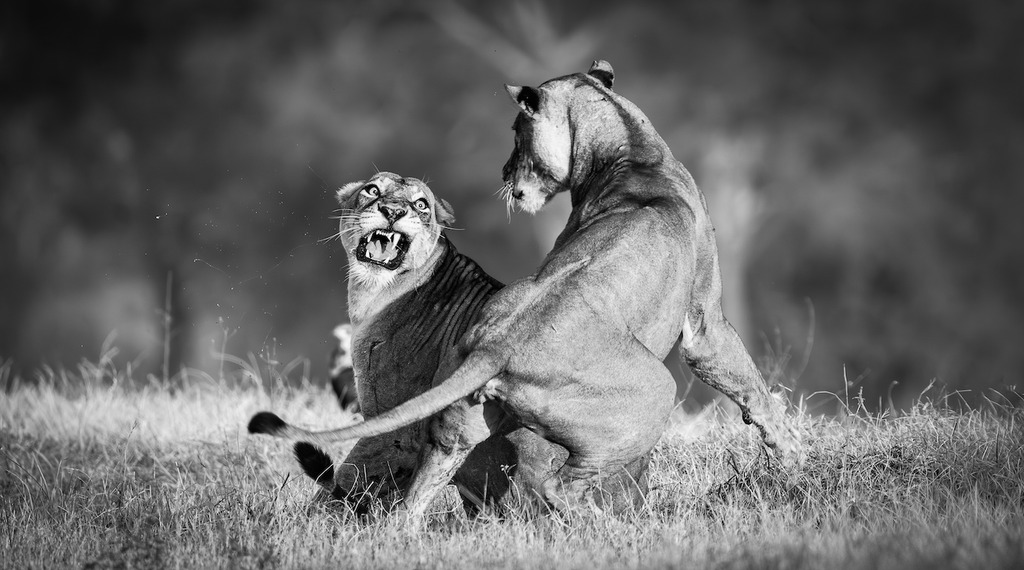
You might have a lioness or an entire pride walking along the Luangwa River with an incredible landscape behind them. When action unfolds here, it often happens in beautiful surroundings, which gives you the opportunity to tell a much bigger story than simply producing a portrait of an animal.
2. What is the best time of year for photography in South Luangwa?
It depends on the individual and what they want to photograph.
If it is your first trip to the valley, I would probably recommend the peak dry season. September is personally my favourite month. It is not yet at the most intense heat of October, but there is a great balance between temperature, wildlife activity and interaction.
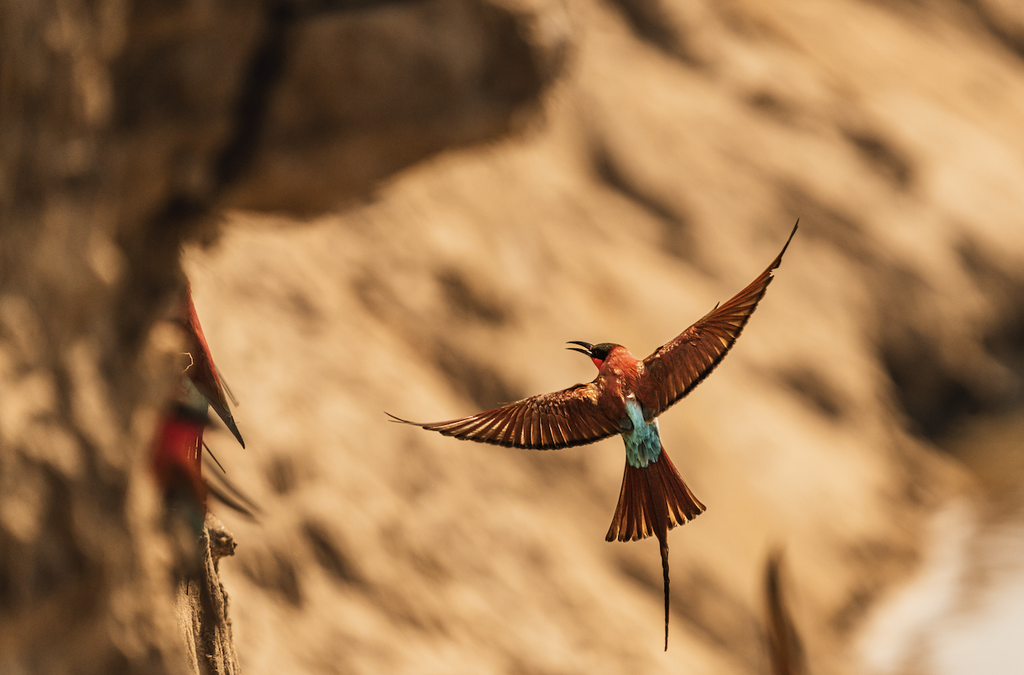
That said, I have been fortunate enough to work throughout Lion Camp’s six-month season, and every part of it offers something different. Earlier in the season, the valley is much greener. The birdlife is abundant and the landscapes can be incredible photographically. As the season progresses and conditions become hotter and drier, there tends to be more wildlife activity around remaining water sources and greater opportunities for interaction.
If you have already experienced South Luangwa during the peak months, I would strongly recommend returning earlier in the season. As a storyteller, spending time here at different stages allows you to build a much broader picture of the valley.
3. What camera gear would you recommend?
I come from a wildlife filmmaking background, so traditionally I have worked mostly with cinema cameras and RAW video. Over time, though, I have become much more of a hybrid shooter, moving between stills and video depending on the moment. Modern mirrorless cameras make that increasingly practical. For still photography, I like a camera with a strong high-resolution sensor because it gives you more flexibility for cropping and working with the image afterwards.
In terms of lenses, I often find myself working somewhere around the 100-400mm or 200-600mm range. Both give you a lot of flexibility for wildlife. I also always see value in carrying something much wider. A 16mm or similar wide lens can be incredibly useful for landscapes or when an elephant walks close to the vehicle and you want to show the animal within its environment.
For hybrid shooters, cameras that allow you to move quickly between high-quality stills and 4K video are extremely useful. I personally work extensively with Sony systems, including the A7 range, while my main cinematography body is the Sony FX6. For dedicated video work, I would also strongly recommend using a fluid head rather than a traditional photographic tripod head. Fluid heads give you much better control over pans and tilts and make following moving animals far easier.
For behind-the-scenes content, 360 cameras have also become incredibly useful. And do not underestimate your phone. Sometimes the easiest way to capture the experience around the photography is simply having someone film a few moments of you working.
Darren’s Recommended Safari Kit
- Stills bodies: A high-resolution mirrorless body, ideally 30MP or above. Sony, Canon and Nikon all have strong options in this category.
- Hybrid bodies: Look for a body that can move quickly between high-quality stills and 4K video. The Sony A7 range is what I personally use, but Canon and Nikon have strong equivalents.
- Cinema bodies: For dedicated filmmaking, I personally use the Sony FX6. Depending on the production, Sony Cinema Line, RED and Blackmagic all offer strong options.
- Lenses: Around 16mm for extreme wides and landscapes, 24-70mm as an all-rounder, 100-400mm for flexible wildlife photography, 200-600mm when you need more reach, and 600-800mm for birds, distant subjects and extreme close-ups.
- Behind-the-scenes gear: A compact 360 camera is extremely useful for capturing yourself working, while a phone remains one of the easiest tools for quick behind-the-scenes footage.
- Audio: A compact microphone or portable Zoom-style recorder is useful for capturing bird calls, lions vocalising, elephants feeding and the natural ambience of the Luangwa.
- Fluid heads: If you plan to shoot video, invest in a good fluid head. It gives you much better control when panning, tilting and following moving wildlife.
- Camera bag: Bring a well-padded, securely closing, dust-resistant camera bag. South Luangwa can become extremely dusty during the dry season, and fine dust gets into almost everything.
4. How important are the guide and vehicle positioning?
Extremely important, but the first consideration should always be respect.
You have to respect the animal, the guide and the other guests at the sighting. Not everyone is there on a photographic safari, and their experience is just as important as yours. I think establishing a good relationship with your guide before the drive is essential. Talk about what you want to achieve and then work together.
Before entering a sighting, I like to establish what I call your tree, or your roots in the ground. Essentially, establish your main position before you start constantly trying to move around. Think about where the light is coming from, what the backdrop looks like and where the animal is facing.
If a sighting is stationary, positioning is relatively straightforward. Personally, I usually want the animal looking towards me, with some depth behind it rather than simply filling the entire frame.
For moving animals, anticipation becomes much more important. If a pride of lions is walking through dense vegetation and your guide knows they are likely to emerge into an open area ahead, I would much rather move ahead, stop and wait for them to approach than continuously follow behind them.
That is how you get animals walking towards you rather than returning home with hundreds of photographs of animals walking away.
The key is anticipation rather than pressure.

5. How do you work with light in South Luangwa?
The morning light here can be beautiful, particularly along the Luangwa River.
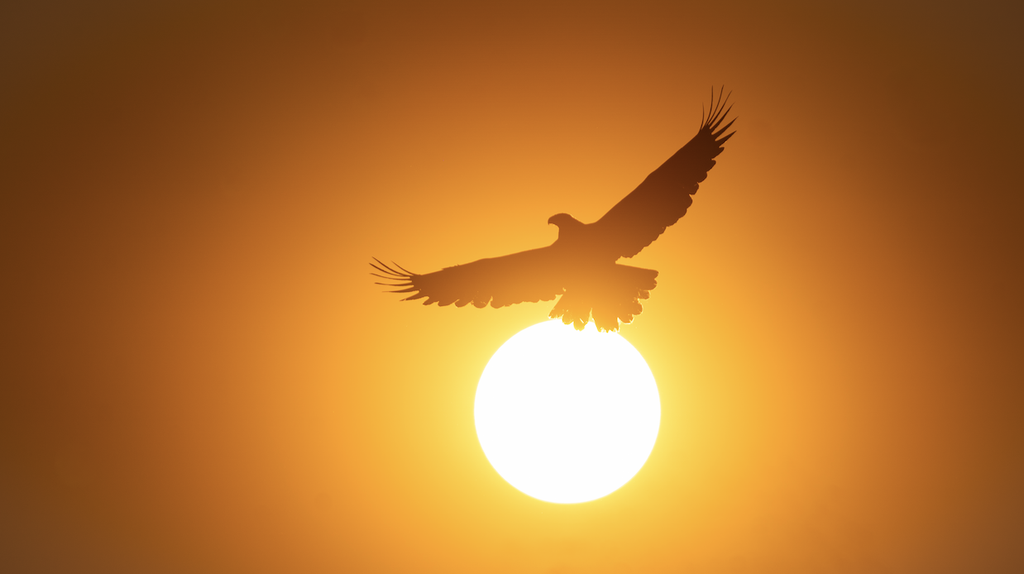
If you do not have an immediate sighting to go to, spending time near the river at sunrise can be an incredible way to begin the morning. When you have good light, use it with whatever wildlife is available.
Once the sun becomes sharper, I start thinking differently. If there is an important sighting, of course you go where the wildlife is. But during the brighter parts of the morning, areas such as ebony or acacia woodland can be incredibly useful because you start getting shafts of light breaking through the canopy. Those light leaks can produce beautiful images while also giving you relief from the harshest glare.
I also like identifying backup locations early in the safari. If you find an open plain that usually carries puku or other general game, remember it. When golden hour arrives and there is no major predator sighting, you already know somewhere with a good setting and reliable wildlife.
A herd of buffalo moving through dust at sunset can be every bit as powerful as a lion.
6. How do you decide between shooting stills and video?
For me, that is often the biggest decision.
I work as a hybrid photographer and cinematographer, so I am constantly deciding whether a moment works better as a still image or as part of a sequence. For video, I generally film in landscape even if I know the final piece may be edited vertically. I frame in a way that gives me flexibility for a 9:16 crop later.
The same applies to stills. I often shoot landscape and crop vertically afterwards if the image allows it. If something happens suddenly, I will use whichever camera is ready. Once the sighting settles, I can slow down. For video, I might capture a wide shot, a medium and a tight. Then I can move back to stills.
If I am building a particular sequence for a film, video takes priority. If I am working on my photographic library, a print collection or a book, I may approach the entire drive with still photography as the priority.
The important thing is deciding what you want the moment to become.
7. What is the biggest mistake photographers make on safari?
Shooting too much.
As I have matured, I have found myself taking fewer photographs. I sometimes think back to photographers working with film, when every frame had a cost and you could not simply take thousands of images because you had the space available.
I often deliberately limit how much storage I give myself because it forces me to become more intentional. You also need to remember that a moment can live in your mind without living on a memory card. Look up from the camera.
Experience the sighting. Watch what is happening around you. Anticipate behaviour rather than experiencing the entire safari through a viewfinder. I would also strongly recommend not spending your game drive reviewing photographs. There is plenty of time for that back at camp. I often see people sitting with sleeping lions and taking hundreds of nearly identical frames.
My philosophy is simple: enjoy the luxury of a digital camera, but shoot with the philosophy of a film photographer.

8. How important is understanding animal behaviour?
It is fundamental to storytelling.
Whether you are completely new to the bush or an experienced guide who has picked up a camera, understanding behaviour allows you to anticipate rather than simply react. If you know leopards well, you begin to recognise signs that one may climb or descend a tree.
If lions are moving, you begin thinking about where they are going rather than where they currently are. This is also where your guide becomes incredibly important. One of the strengths of Lion Camp is that our guides know this particular landscape exceptionally well. Some have worked here for more than two decades. This is their home ground.
Photographers can sometimes become very specific about what they want, and I think it is important not to stifle your guide’s ability to make decisions.
Ask them: What do you think? Where do you think this animal is going? Where should we position?
Be a student of their knowledge.
The best results usually happen when the photographer’s ambitions and the guide’s understanding of the animal and landscape work together.
9. What should photographers focus on besides big cats?
I love big cats. Leopards are my favourite animal.
But I think we can become too focused on chasing tails and forget how much variety is around us. One of my favourite subjects in South Luangwa is the yellow baboon, particularly in the ebony forests. Harsh sunlight breaking through deep shade can create incredible rim light around them, and baboons are almost always doing something.
Elephants are another phenomenal subject. There is so much detail to work with, from the movement of the trunk and the texture of the skin to the grace of an entire herd moving together.
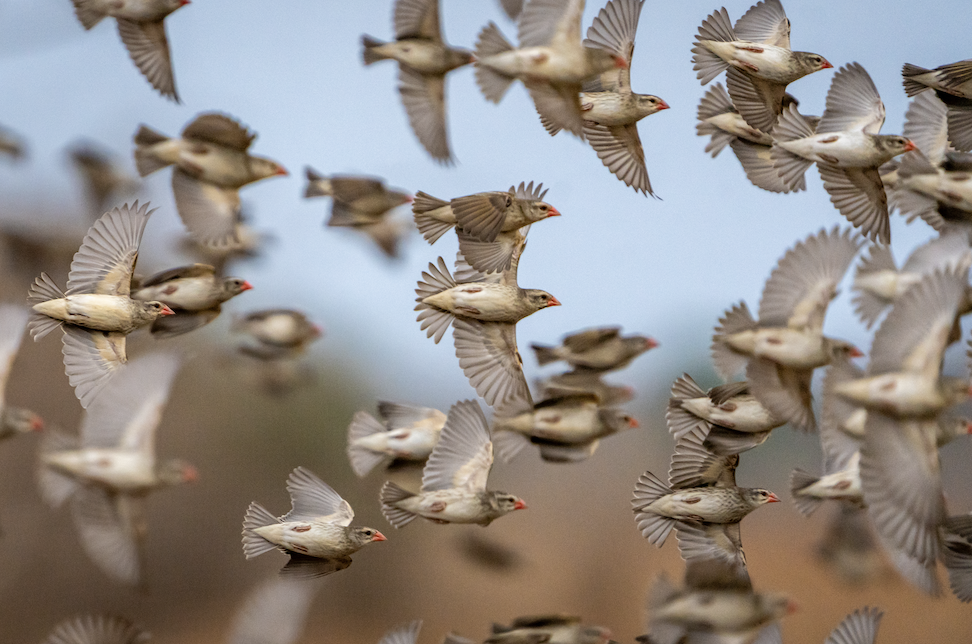
During the hotter parts of the day, when lions may simply be sleeping, I often recommend moving towards water. Find some shade and wait for buffalo or elephants to arrive. Photograph the birds bathing or hunting.
Fishing parties around shrinking lagoons are one of my favourite events in the valley because there can be extraordinary interaction between storks, spoonbills, fish eagles, crocodiles and other species.
Use the cooler mornings for predators and high-profile sightings, but allow the rest of the valley to reveal itself as the day progresses.
Sometimes the cats will even come and find you.
10. What mindset should someone bring on a photographic safari?
Come with an open mind.
Heavy expectations create opportunities for disappointment. The wild always has something to offer, but it may not be the thing you expected to photograph.
Do not put too much pressure on yourself, even if this is a trip you have waited your entire life to take. Pressure does not create diamonds out here. It usually just creates stress in a place you came to enjoy. You are going to miss shots. I have missed incredible shots. Animals are unpredictable.
If you miss the photograph, remember that you were still there. Remember the people you were with and the time you spent with your guide. Most importantly, have fun.
Even when I am working professionally, I produce my best and most creative work when I am enjoying myself. When I put too much pressure on a capture, I become analytical and start overthinking everything.
Go out, be creative, spend time with other people who love what you love and feed off that energy.
The Luangwa has a remarkable ability to reward an open mind.
Bonus Question 11. What has been your highlight offering photographic and cinematography experiences at Lion Camp?
One of the biggest highlights has been seeing guests take what they learn in the field and turn it into something that lives far beyond the safari itself.
Tamara Guijt was surprised by the trip by her husband, Richard, and had a particular interest in video. On a dedicated cinematography safari day, we focused specifically on filming with a cinema setup. One of the clips she captured of Chisomo has since been viewed more than five million times online.
More recently, Eloise, a psychology student travelling with her family, became increasingly interested in video while out here. After a short session going through some of the fundamentals, she began applying the techniques almost immediately and has since produced excellent wildlife work of her own, even seriously considering a career as a wildlife filmmaker.
For me, that is one of the most rewarding parts of it. People come here interested in wildlife, photography or film, and sometimes leave with an entirely new creative direction, and an audience of hundreds and thousands to share it with.
Photography and Cinematography experiences at Lion Camp
At Lion Camp, we approach photographic safaris a little differently. Guests are welcome to bring their own equipment and experience the valley with their Lion Camp guide, or to travel as part of a group with an external photographic guide.
From an in-house perspective, and subject to availability, we also offer dedicated photographic and cinematography upgrade experiences that can be arranged for a single day or across multiple days. These can focus entirely on stills, entirely on video, or a hybrid of both depending on your interests, experience and equipment.
If this is something you would like to include in your stay, please reach out to us in advance so we can discuss the options available.
For more information about photographic and cinematography safaris at Lion Camp, contact in**@******mp.com.

