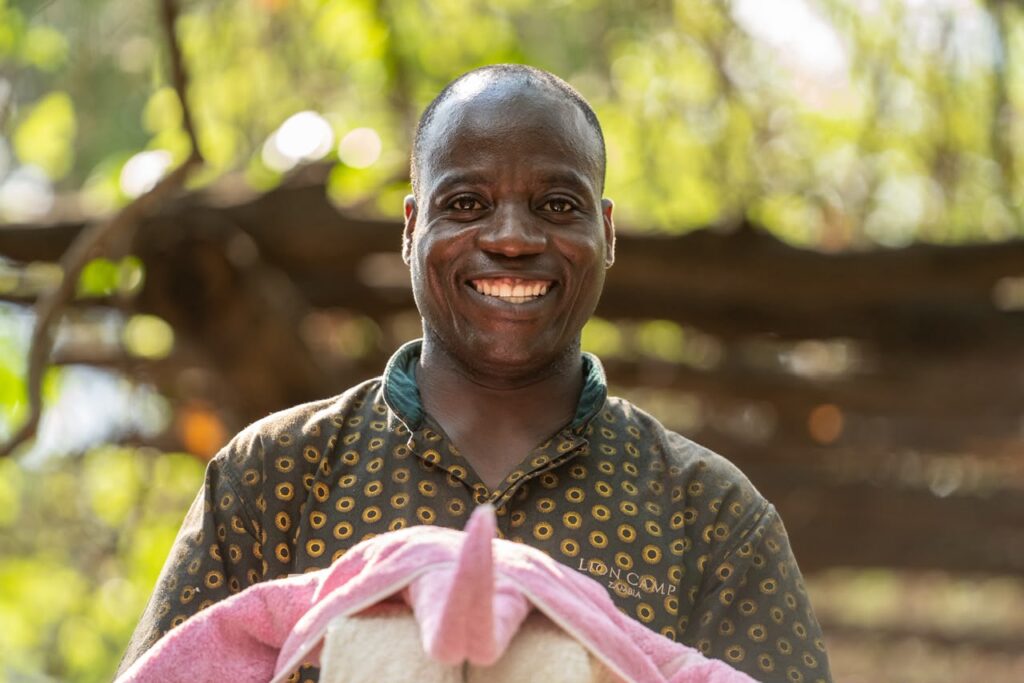
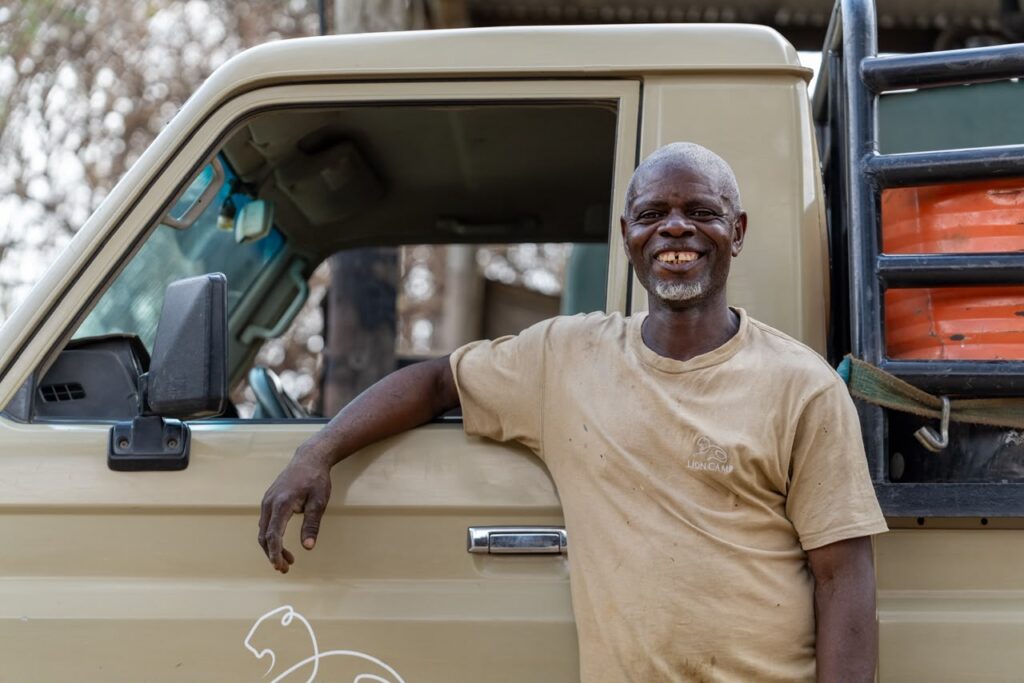
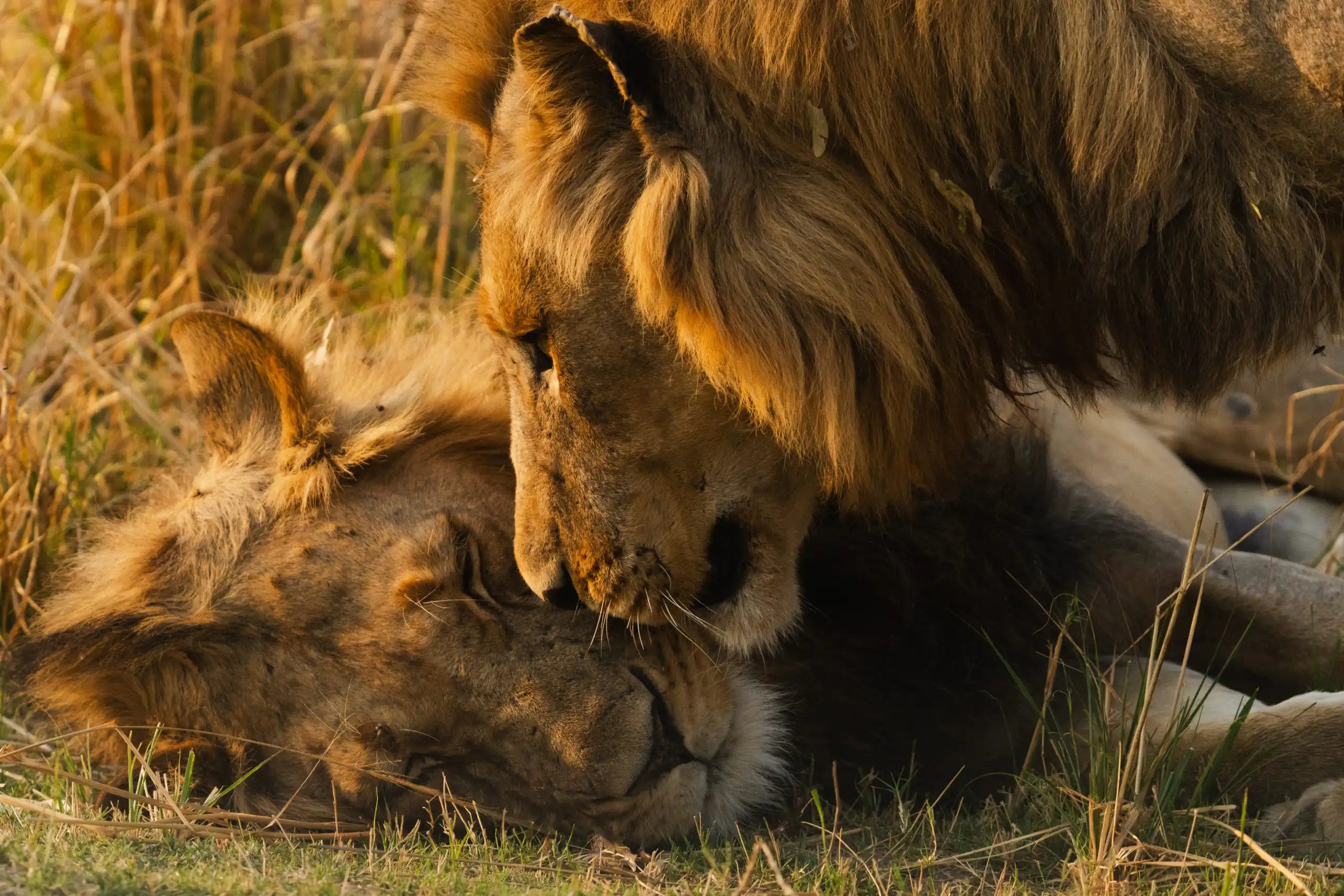
Every safari has a beginning. The walking safari has a precise one, and it runs through Lion Camp.
Long before walking safaris spread across Africa, a small camp on the west bank of the Luangwa River was the place the very first walking guests were headed. This is the story of that camp, the man who made the walk famous, and how, more than sixty years later, the circuit he walked has been brought back together.
A CAMP FOR SCOUTS, ON THE LION PLAIN
The record begins in 1955. That year the government’s new Luangwa Valley Development Unit, under Ranger W. E. Poles, built a seasonal pontoon across the Luangwa at Chibembe to give access from the east. On the far bank it built Lion Camp and a set of viewing tracks.
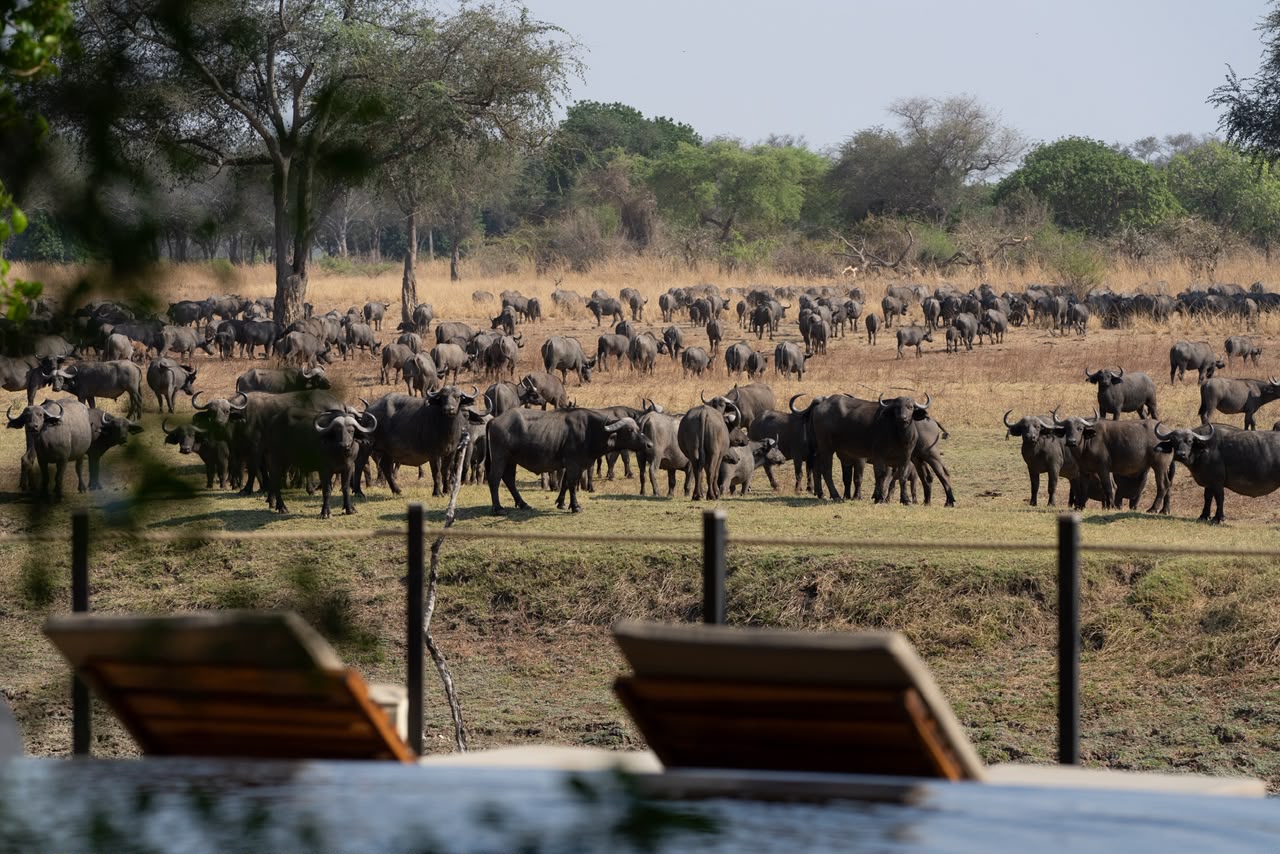
Lion Camp began as a base for game scouts on anti-poaching patrol, and it was the first camp ever built west of the Luangwa. It still stands on that same ground today, on the Lion Plain in the remote northern sector of South Luangwa National Park.

1961: NORMAN CARR AND WILDERNESS TRAILS
Norman Carr had already spent decades in the Luangwa Valley as a game ranger. He believed two things earlier than almost anyone: that wildlife survives where the people who live beside it share in its value, and that the truest way to know wild Africa is on foot.
In 1961 Lion Camp was leased to Luangwa Safaris, a company of which Carr was a director. The valley’s official history, compiled by W. L. Astle, Zambia’s former Chief Wildlife Research Officer, records the moment in one line: “from this camp Wilderness Trails were pioneered by Carr as a type of tourism.”
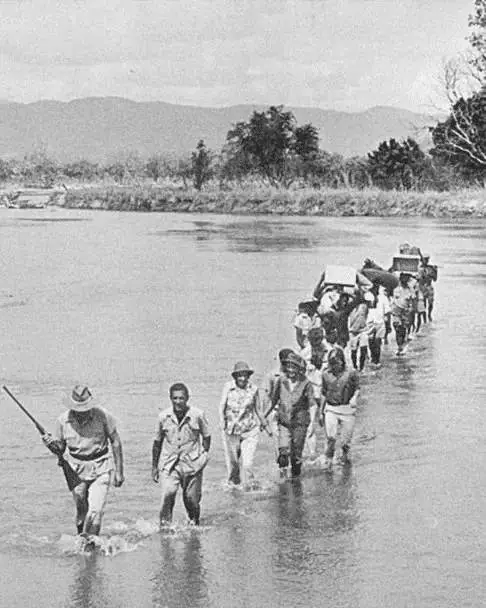
Guests came in on the road from Fort Jameson, today’s Chipata, which ended at the Chibembe crossing on the east bank. They crossed the river and walked with Carr to Lion Camp. A small group, a guide, an armed scout and time on foot: it is the model most walking safaris in Africa still follow.
CHIBEMBE, AND A GENERATION OF GUIDES
In 1968 Carr built a new camp on the east bank, in the area that had always been known as Chibembe, and named it for the place. Chibembe Safari Camp became the hub of his walking circuit and the place where a generation of Luangwa guides learned their craft. Among them was Phil Berry, who went on to found Kuyenda in the south of the park in 1992. Kuyenda means “to walk” in Nyanja.
DECADES APART
In the years that followed, the circuit came apart. In 1975 a new airport and bridge opened at Mfuwe, and the valley’s front door moved south, away from the Chibembe pontoon. The camps along Carr’s original route passed through different hands, and the ground on the east bank fell quiet.
Lion Camp carried on. It passed into private hands in 1999 and was rebuilt on the same ground in 2017 under the Boulles, welcoming guests to the new camp in the 2018 season. But the walk between the two banks was no longer run as one journey.
THE CIRCUIT IS WHOLE AGAIN
Today Lion Camp and Chibembe, the two ends of Carr’s first walking circuit, are in one family’s care for the first time in decades. Both are part of the Safari Heritage Collection, which is Houston family owned and led by Brooke and Corby Robertson III, whose ties to the Luangwa Valley go back to 1984.
Chibembe Wildlife Reserve was acquired from Wilderness Trails Limited, the company Carr formed in 1975 to run his walking safaris, and was rebuilt and reopened in June 2026 with walking once again at its heart. It is a private reserve, opened to one party at a time by arrangement, and Lion Camp is just 35 minutes away by road plus a river crossing.
Alongside them is The Bushcamp Company, the largest operator in South Luangwa, with the iconic Mfuwe Lodge, The Villas at KuKaya and six small bushcamps in an exclusive 140,000-acre area in the south of the park.
SIXTY MILES, CAMP TO CAMP
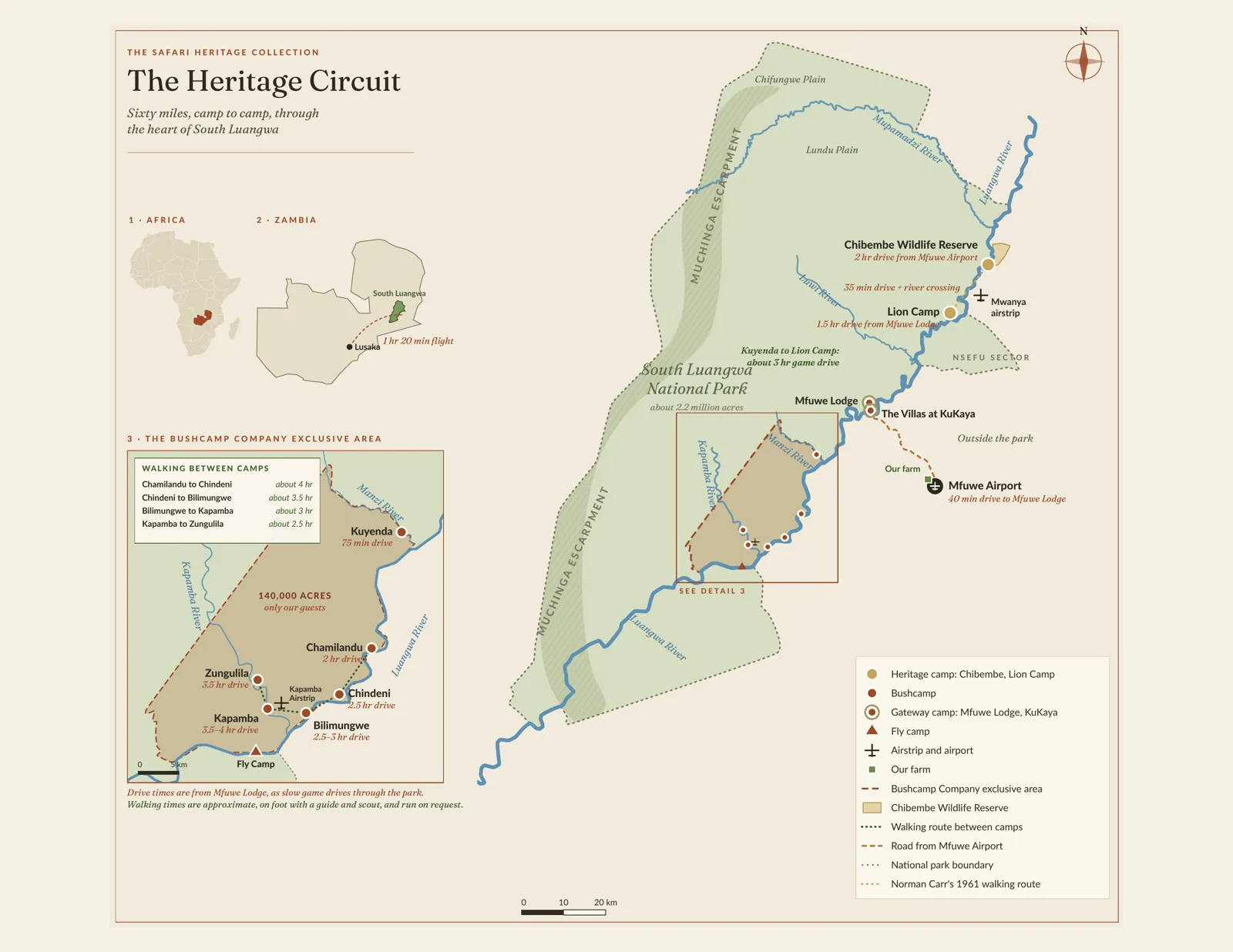
Together, the ten camps of the Collection form The Heritage Circuit, one unbroken journey through the heart of South Luangwa: sixty miles, camp to camp. Most multi-camp safaris fly guests over the wild between stops. This one takes you through it, with every move between camps made on a game drive, on foot or by boat.
- The gateway: Mfuwe Lodge and The Villas at KuKaya, inside the park near Mfuwe.
- The bushcamps: Kuyenda, Chamilandu, Chindeni, Bilimungwe, Kapamba and Zungulila, small camps in the exclusive southern area where walking is the morning rhythm.
- Lion Camp: on the Lion Plain in the remote northern sector, above a lagoon where the game comes to camp. Where Carr’s first walkers were headed.
- Chibembe Wildlife Reserve: on the east bank, ground zero of the walking safari, where it all began.
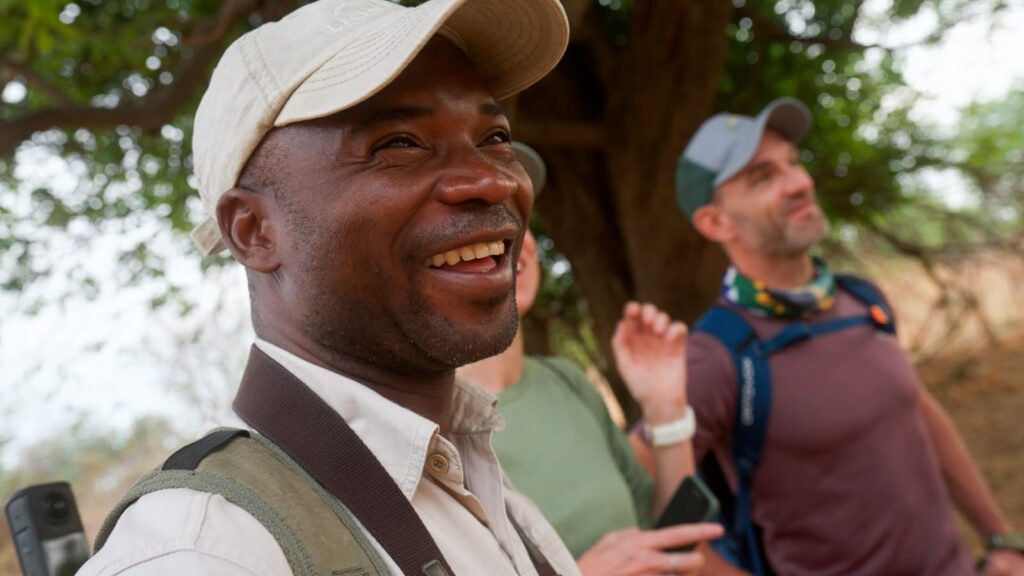
Every camp offers walking safaris, always with a licensed guide and an armed scout from the Department of National Parks and Wildlife. Walking is always optional, and game drives by day and after dark run at every camp. Walkers at Lion Camp must be 16 or older.
WAYS TO TRAVEL THE CIRCUIT
The Complete Luangwa, 8 nights. The Villas at KuKaya (2 nights), Kuyenda (3) and Lion Camp (3). The game drive north from Kuyenda to Lion Camp takes about three hours and is a safari in itself.
The Heritage Journey, 16 nights. Mfuwe Lodge or The Villas at KuKaya (1 night), Zungulila (2), Bilimungwe (3), Kuyenda (2), Lion Camp (3) and Chibembe (5). The full circuit, south into the exclusive bushcamp area, north to Lion Camp, and across the river to finish on the ground where the walking safari began. Offered on set dates each season.
Or simply come to Lion Camp, and walk out from the camp the record names.
WALK WHERE IT BEGAN
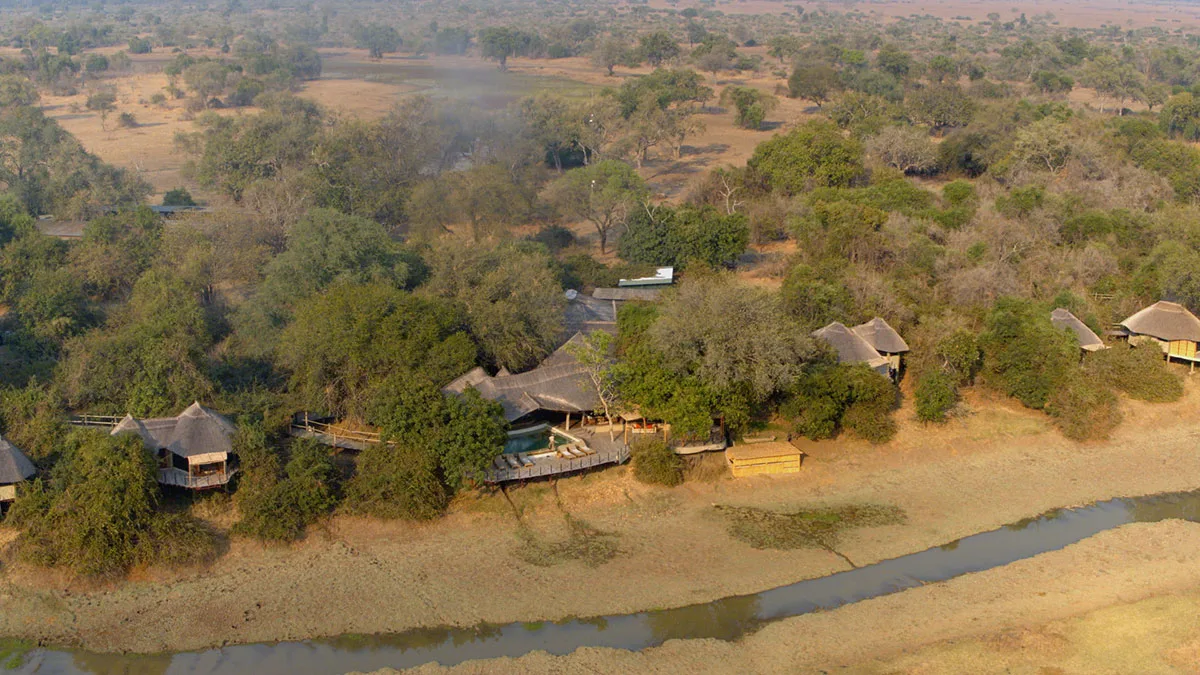
Lion Camp has changed a great deal since the scouts’ camp of 1955: ten suites on timber walkways, a deck above the lagoon, and a team, led by Vicky and Wayne, that has made it an award-winning safari lodge. But the ground is the same, and so is the idea. Step off the deck with your guide and scout, and you are walking in the footsteps of the very first walking safari guests.
Plan your safari with us at info@lioncamp.com, or explore the full circuit at safariheritagecollection.com.
Sources: W. L. Astle, A History of Wildlife Conservation and Management in the mid-Luangwa Valley, Zambia (1999), entries for 1955 and 1961; Alistair Tough, Norman Carr: Pioneer of Community-based Wildlife Conservation (2024).